Works & Catalogue
Explore a catalogue of more than 170 original compositions spanning piano, chamber music, percussion ensemble, wind symphony, vocal music, and educational repertoire. My works range from short character pieces and concert études to large-scale sonatas, string quartets, and ensemble works, each shaped by a lifelong passion for composition, performance, and creative storytelling.

Piano Sonatas
Composed between 2020 and 2026, the Eight Piano Sonatas represent a major cornerstone of Yitong Zheng's catalogue. Together they chart a remarkable creative journey, exploring classical forms, lyrical expression, virtuoso writing, and large-scale musical architecture across six years of continuous development.
From the variation movements, minuets, and fugues of the early sonatas to the expansive structures and mature musical language of the later works, the cycle offers a unique insight into the evolution of the composer's artistic voice. Rich in contrast, character, and imagination, these works showcase the piano's ability to sing, dance, reflect, and inspire.

Piano Sonata No. 1, Op. 8
-
Theme and Variations
-
Minuetto con Espressione
-
Fuga

Piano Sonata No. 2, Op. 10
-
Allegro
-
Allegro Pesante
-
Nocturno

Piano Sonata No. 3, Op.12
-
Allegro con Espressione
-
Adagio con Espressione
-
Vivace con Brio

Piano Sonata No. 4, Op. 17
-
Allegro Con Brio
-
Andantino Espressivo
-
Allegro Molto

Piano Sonata No. 5, Op. 25
-
Allegro Spiritoso
-
Adagio Cantabile
-
Vivace Con Brio

Piano Sonata No. 6, Op. 28
-
Allegretto Con Espressione
-
Moderato Grazioso
-
Vivace Subdolamento

Piano Sonata No. 7, Op. 36
-
Moderato
-
Adagio Con Espressione
-
Allegro Pesante

Piano Sonata No. 8, Op. 39
-
Allegretto con Espressione
-
Minuetto con Espressione
-
Allegro Molto
Baroque Suites
Composed between 2020 and 2025, the Three Baroque Suites explore the enduring influence of Baroque dance forms through a contemporary compositional voice. Each suite follows the traditional sequence of Allemande, Courante, Minuet, Sarabande, Gavotte, and Gigue, while combining historical inspiration with original thematic material, modern harmonic language, and expressive pianistic writing.
Across the three suites, familiar forms are transformed into concert works that blance elegance, lyricism, contrapuntal craftsmanship, and dramatic contrast. Together they form a cohesive collection that reflects an ongoing fascination with Baroque architecture and its continuing possibilities for contemporary piano music.

Baroque Suite No. 1
Op. 14
-
Allemande in C Minor
-
Courante in C Minor
-
Minuetto and Trio in Bb Major
-
Sarabande in Bb Major
-
Gavotte in F Major
-
Gigue in D Minor

Baroque Suite No. 2
Op. 21
-
Allemande in B Major
-
Courante in C# Minor
-
Minuet in E Major
-
Sarabande in B Major
-
Gavotte in E Major
-
Gigue in G# Minor

Baroque Suite No. 3
Op. 33
-
Allemande in A Minor
-
Courante in A Minor
-
Minuet Bb Major
-
Sarabande in F Major
-
Gavotte in C Major
-
Gigue in D Minor
Romantic Piano Works
Composed between 2020 and 2025, these Romantic piano collections pay tribute to the music of Frédéric Chopin, whose works have been a lasting source of inspiration in both performance and composition. Drawing upon the expressive tradition of the étude, nocturne, and waltz, the collection explores lyricism, virtuosity, colour, and character through a contemporary compositional voice.
While inspired by Chopin's musical language, each work seeks to develop its own identity. The études explore technical and musical challenges through an original journey around the circle of fifths, the nocturnes celebrate introspection and poetic expression, and the waltzes capture elegance, energy, and dance-like vitality. Together, these works reflect both admiration for a musical hero and a personal exploration of the Romantic piano tradition.

Twelve Etudes, Op. 13
Inspired by Chopin's celebrated sets of études, the Twelve Études, Op. 13 form a large-scale collection composed between 2020 and 2022. The twelve works are organised into six pairs of relative major and minor keys, gradually travelling around the circle of fifths while exploring a wide variety of pianistic techniques, textures, and musical characters. Rather than serving as technical exercises alone, the études aim to combine virtuosity with expressive musical storytelling, following the Romantic ideal established by Chopin while pursuing an individual compositional voice.

Two Nocturnes, Op. 27
The Two Nocturnes, Op. 27 were composed in 2024 as an affectionate homage to Chopin's nocturnes, particularly his beloved Op. 27 set. Featuring a lyrical E-flat major nocturne and the more sombre E minor La Tristezza, the pair explores atmosphere, melodic songfulness, and expressive piano colour. Coincidentally sharing the same opus number as Chopin's two Op. 27 nocturnes, these works reflect a personal connection to one of the composer's most admired contributions to the piano repertoire.

Three Waltzes, Op. 32
The Three Waltzes, Op. 32 were inspired by Chopin's waltzes, particularly the Op. 34 set studied during the COVID-19 period. Composed between 2024 and 2025, the collection combines graceful dance rhythms with contrasting moods ranging from brilliance and virtuosity to elegance and lyricism. While rooted in the spirit of the Romantic salon waltz, the works seek to balance tradition with originality, celebrating one of the piano repertoire's most enduring and beloved forms.
Short Piano Miniatures
Spanning from 2018 to 2026, these collections showcase a more intimate side of Yitong Zheng's catalogue. Written both at the beginning of his compositional journey and later as a creative contrast to larger projects, these miniatures explore a wide variety of styles, forms, and musical characters within concise piano works. Early collections reveal an emerging composer experimenting with variations, dances, rondos, and character pieces, while later sets revisit the miniature form with greater harmonic confidence and artistic maturity. Together, these works demonstrate a lifelong appreciation for the power of musical ideas expressed with simplicity, clarity, and imagination.

Seven Pieces for Piano Solo
Op. 1
-
Allegro in C Major
-
Moderato in C Major
-
Allegro con Brio in C Major
-
Allegro in C# Major
-
Allegro Vivace in C Major
-
Rondo in C Major
-
Menuetto in C Major
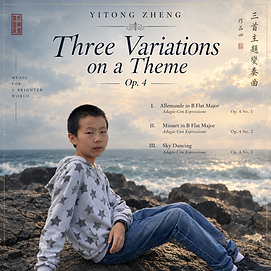
Three Variations on a Theme
Op. 4
-
Allemande in Bb Major
-
Minuet in Bb Major
-
Sky Dancing

Five Pieces for Piano Solo
Op. 6
-
Presto Portamento Finger Exercise
-
Allegro Moderato in Eb Major
-
Chaconne in A Minor
-
Vivace Con Brio in C# Minor
-
Valse-Impromptu in C Minor

Sonatina for Piano
Op. 18
-
Allegro in A Major
-
Minuet in D Major
-
Vivace Con Brio in A Major

Infantiles for Piano
Op. 35
-
Allegretto in Eb Major
-
Allegro Portamento in Bb Minor
-
Moderato Leggero in Gb Major
-
Adagio in Bb Major
-
Allegretto Con Brio in D Minor
-
Allegro Molto in B Minor
Character & Experimental Works
These works explore musical ideas that fall outside the traditions of the sonata, suite, and concerto. Drawing inspiration from Baroque counterpoint, Argentine folk music, unusual rhythmic structures, and technical piano studies, they each investigate a specific compositional challenge or stylistic concept. Whether through fugal architecture, irregular groupings, cultural influences, or innovative approaches to pianistic writing, these compositions reflect a spirit of experimentation and a desire to expand musical language through focused artistic exploration.

Baroque Toccata No. 1
Op. 22
Inspired by J. S. Bach's keyboard toccatas, particularly BWV 914, Toccata No. 1 combines a multi-movement Baroque framework with original thematic material and modern pianistic writing. The work progresses through contrasting sections including a prelude, lyrical adagio, and movements constructed using fugal principles, where subjects and countersubjects are developed through imitative textures, tonal contrasts, and episodic bridge passages. The result is a contemporary homage to Baroque counterpoint and formal design.

Four Finger Exercises
Op. 23
Beginning as studies inspired by Czerny's technical exercises, the Four Finger Exercises gradually evolve into character pieces built around unusual rhythmic groupings and metres. Each work explores a different numerical framework, including groupings of 5, 7, 11, and 13, transforming technical patterns into musical expression. While the earlier movements focus on rhythmic and pianistic challenges, the later exercises incorporate cross-rhythms, lyrical accompaniment, ornamentation, and nocturne-like textures, demonstrating how a technical idea can develop into a fully realised artistic statement.

Argentine Folk Suite
Op. 24
Inspired by Alberto Ginastera's Suite de Danzas Criollas, the Argentine Folk Suite explores Argentine musical nationalism through piano writing that integrates folk rhythms, changing metres, guitar-inspired sonorities, and contrasting dance characters. Drawing upon rhythms associated with malambo, gato, and zamba traditions, the work combines energetic dance episodes with lyrical and atmospheric passages before culminating in increasingly rhythmic and virtuosic sections. While influenced by Argentine musical traditions, the suite also reflects the composer's personal voice through its dramatic contrasts and expressive narrative.

Baroque Toccata No. 2
Op. 38
Written as a companion to the earlier Toccata No. 1, Toccata No. 2 revisits the Baroque-inspired toccata form through a mature compositional voice. Structured around contrasting movements including a prelude, allegro, adagio, and concluding contrapuntal finale, the work continues the exploration of fugal and imitative techniques while expanding the dramatic and architectural scope of the genre. Together with its predecessor, it forms part of an ongoing engagement with Bach-inspired forms and contrapuntal craftsmanship.

Fairytale Suite for Piano Duet
Op. 31
Inspired by Maurice Ravel's Ma mère l'Oye, the Fairytale Suite for piano duet is a collection of contrasting musical scenes that explore fantasy, colour, and storytelling through a shared network of recurring motifs. The suite begins with a tranquil Pavane inspired by the stillness of dawn, followed by the pentatonic sound world of Pentatonic Reverie, depicting the bustling enchantment of a distant land of pagodas, before concluding with an elegant Waltz.
Although each movement presents a distinct atmosphere, the suite is unified by the transformation of common melodic ideas, which reappear throughout the work in different forms and emotional contexts. Drawing upon impressionistic harmony, pentatonic writing, evocative textures, and richly coloured duet writing, the suite pays tribute to Ravel while developing a personal approach to musical narrative and thematic transformation.
Piano Concertos
The Piano Concertos represent some of the earliest large-scale works in the catalogue and document the beginnings of the composer's lifelong interest in extended musical forms. Written between 2019 and 2024, these works combine virtuosic piano writing with orchestral and solo instrumental textures, creating a hybrid style that draws upon the traditions of the concerto, symphony, and sonata. Across the four concertos, influences range from Classical and Romantic repertoire to contemporary popular music, including reimagined references to Mozart, Beethoven, Chopin, and Cantopop melodies. Each concerto follows a concise two-movement design, pairing an expansive opening movement with a shorter contrasting finale. Together, the works trace the development of the composer's musical language from technical studies and thematic experimentation to increasingly ambitious large-scale structures, while reflecting a long-standing fascination with thematic transformation, narrative architecture, and the dialogue between piano and ensemble.

Piano Concerto No. 1
Op. 5
-
Esercizio Delle Dita
-
Adagio in C Major

Piano Concerto No. 2
Op. 7
-
Sinfonia solista per violoncello
-
Temitica di Tiancheng

Piano Concerto No. 3
Op. 11
-
Concerto per violino e orchestra
-
Sinfonia di Gigue per violino
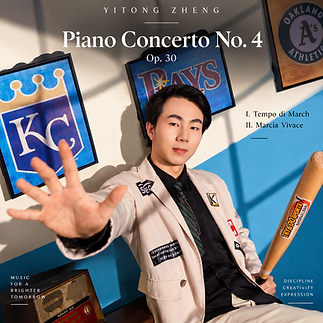
Piano Concerto No. 4
Op. 30
-
Tempo do March
-
Marcia Vivace

Percussion Ensemble Anthology
Op. 16 · 29 · 34 · 41
The Percussion Ensemble Anthology is a collection of four works for percussion ensemble composed between 2022 and 2026. Drawing upon percussion ensemble traditions, Baroque counterpoint, and the arranging techniques of 1980s and 1990s Cantopop, the works explore rhythm, colour, thematic development, and ensemble interaction through fanfares, lyrical interludes, solo features, and large-scale formal designs.
A defining feature of the collection is the use of layered melodic writing. In works such as Major Project for Percussion Ensemble Op. 34, multiple melodies are designed to function independently while fitting together contrapuntally, allowing changes in instrumentation and texture to shift the listener's focus from one musical idea to another. Combined with Cantopop-inspired arranging techniques such as instrumental breakdowns, gradual additions of percussion, and featured solo sections, these works create a distinctive fusion of classical contrapuntal thinking and contemporary ensemble writing.
Chamber & Orchestral Works
The Chamber & Orchestral Works bring together compositions written between 2021 and 2026 for chamber ensembles, string quartets, wind symphony, percussion ensemble, and piano duet. Together, these works explore a wide range of subjects, from Australian wildlife and personal experiences to abstract musical ideas and ensemble colour. Whether inspired by nature, memory, emotion, or everyday moments, each work reflects a distinctive approach to thematic storytelling and orchestration, demonstrating the composer's continued development across chamber and large-ensemble genres.

Variazoni Della Suite Orchestrale
Op. 15
-
Lento
-
Allegro
-
Adagio
Composed in September 2021, Variazioni Della Suite Orchestrale marked the composer's return to composition after a three-month hiatus caused by academic pressures, COVID-19 lockdowns, and health-related challenges. Written as background music for a physical inactivity advertisement, the three short movements were completed within three days and introduced a chamber ensemble of strings, woodwinds, brass, and drum set. Despite its compact duration, the work represents an important turning point, signalling the beginning of a new period of creative activity.

String Quartet No. 1
Op. 19
-
Bushfire
-
Variazoni di Canguro
-
Tema Vombato
The first string quartet is inspired by Australian wildlife and the natural environment of Queensland. Its three movements depict contrasting scenes: flying foxes escaping a bushfire, the energetic movements of kangaroos, and the broad, grounded character of wombats. Combining string quartet and percussion, the suite explores how rhythm, texture, and instrumental colour can evoke the sounds, movements, and habitats of native animals.

String Quartet No. 2
Op. 26
-
Toccata
-
Capriccio
-
Calmo
-
Furioso
-
Meccanico
-
Polka
Unlike the outward-looking world of Op. 19, the second quartet is deeply autobiographical. Across six contrasting movements, it traces an emotional journey through chaos, anxiety, exhaustion, anger, numbness, and recovery, with each movement reflecting a specific personal experience. Through extreme contrasts of tempo, metre, harmony, texture, and notation density, the work transforms lived experience into a large-scale musical narrative.

Three Pieces for Wind Symphony
Op. 37
-
Horizons
-
Wandering Winds
-
Through Shifting Currents
Inspired by the composer's experiences performing in youth, school, community, and university wind ensembles, Three Pieces for Wind Symphony grew from a single work written for a composer reading session. The melodies originated from unexpected moments in everyday life: a tune imagined while trying to fall asleep, a melodic idea remembered after rehearsal, and a motif derived from notes heard on a playground instrument years earlier. The three movements, Horizons, Wandering Winds, and Through Shifting Currents, were later arranged for both percussion ensemble and piano duet, allowing the music to be performed by a wider variety of ensembles.